
#Luxury travel is having a very good year. The kind of good year that makes hotels raise rates with confidence, villa owners suddenly remember they are “almost fully booked,” and everyone with a sunset view believe they are now in the business of miracles.
Across the industry, the direction is clear: travelers are spending more on trips that feel personal, private, meaningful, and difficult to replicate. Fora’s 2026 Hot List describes a shift toward “experience-forward luxury,” while Virtuoso’s 2026 Luxe Report, as reported by TravelPulse, points to travelers prioritizing meaningful, restorative, deeply personal travel over generic indulgence. Forbes has also been covering this move toward “deep luxury,” magical one-of-a-kind moments, villas, privacy, personalization, and full-service luxury rentals.
So, on paper, luxury travel should be better than ever.
The budgets are there.
The demand is there.
The clients are more intentional.
The destinations are more photographed than ever.
The advisors are more sophisticated.
The villas are more dramatic.
The yachts are shinier.
The champagne is still arriving with sparklers, because apparently civilization depends on it.
And yet, many high-end trips still fall apart.
Not always dramatically. Not always in a way that becomes a complaint. But in small, expensive, reputation-damaging ways. A dinner runs late and ruins the next reservation. A transfer is technically booked but not positioned correctly. A beach club table is confirmed but not the table the client imagined. A villa is beautiful but the service flow feels cold. A yacht day looks perfect in the proposal, but the timing, lunch stop, weather, and guest mood are not managed properly.
Nothing is “wrong,” exactly.
And that is the problem.
In modern luxury travel, being technically correct is no longer enough. The client did not pay for “technically correct.” They paid for effortless.
#The luxury market is not just growing. It is becoming less forgiving.
The rise in luxury travel is not simply about more people booking expensive things. It is about a more demanding definition of what luxury is supposed to feel like.
The old version of luxury was easier to explain. A five-star hotel. A private villa. A recognizable beach club. A yacht charter. A dinner reservation at the place everyone already knows from Instagram.
The new version is much harder, and frankly, a little more dangerous for anyone pretending that bookings alone can carry the experience.
Luxury in 2026 is about control without visible effort. It is about privacy without isolation, access without chaos, flexibility without stress, and personalization without forcing the client to explain themselves twelve times to twelve different people.
Fora’s 2026 forecast highlights experience-forward luxury and destinations shaped by story, culture, and feeling, while Forbes has pointed to a broader movement toward more elusive, magical, deeply personal travel moments. In parallel, the villa category continues to grow because privacy, space, and personalization now matter as much as traditional hotel prestige.
That shift is exciting for the industry.
It is also exposing a weakness.
Because when clients want an experience that is personal, fluid, emotional, and perfectly timed, the itinerary becomes only the beginning. The real product is what happens after the plan meets reality.
And reality, especially in places like Mykonos and Ibiza, has a personality.
#The perfect itinerary is often the most dangerous illusion.
A perfect itinerary gives everyone comfort. It looks elegant. It feels organized. It gives the impression that the trip is under control.
There is the villa.
There is the yacht.
There is the beach club.
There is the dinner.
There is the driver.
There is the “confirmed” label that makes everyone sleep better.
Lovely.
But anyone who has actually operated on the ground in Mykonos or Ibiza knows that a confirmed plan is not the same thing as a controlled experience.
The island changes by the hour. Demand shifts. Venue priorities shift. Weather shifts. Traffic shifts. Guest energy shifts. A client who wanted a full party day in the morning may want a slow dinner by sunset. A group that wanted privacy may suddenly want the center table. A yacht itinerary that looked perfect in an email may need to change because the wind decided to join the conversation, as it often does, uninvited but very confident.
This is where many trips begin to break.
Not at the moment of booking, but in the spaces between bookings.
Between the villa and the beach club.
Between the beach club and the yacht.
Between the yacht and dinner.
Between what was promised and what now makes sense.
The itinerary may still look beautiful. The client experience may already be drifting.
#Why high-end trips collapse in the middle, not at the beginning
Most luxury travel failures are not caused by one catastrophic mistake. They are caused by a chain of small unhandled moments.
A transfer delayed by 20 minutes at the wrong time.
A restaurant table placed slightly away from the energy of the room.
A beach club minimum that was not clearly explained.
A villa staff rhythm that does not match the group’s lifestyle.
A yacht day that lacks flow because nobody is managing the emotional temperature of the group.
This is the part outsiders underestimate. Luxury clients rarely judge a trip only by the object itself. They judge the feeling around it.
The villa can be exceptional, but if arrivals, provisioning, staffing, and daily coordination feel loose, the villa becomes a beautiful inconvenience.
The yacht can be stunning, but if the day is not paced properly, if the lunch stop is wrong, if the music, timing, and group energy are not aligned, the yacht becomes transportation with nice cushions.
The table can be confirmed, but if it does not match the client’s expectation, status, group size, mood, or timing, it becomes a reservation that technically happened and emotionally failed.
And in luxury travel, emotional failure is the expensive kind.
#The industry keeps selling access. The client is buying confidence.
There is a subtle but important difference between access and confidence.
Access says, “We can get you in.”
Confidence says, “You will be handled.”
Access is transactional. Confidence is operational. Access gets the booking. Confidence protects the experience.
This distinction matters because the luxury traveler of 2026 is not necessarily impressed by the same things that impressed travelers ten years ago. The market is saturated with beautiful properties, impressive boats, curated guides, private chefs, wellness add-ons, and “exclusive” experiences that somehow appear on everyone’s feed by Wednesday.
What clients now respond to is the feeling that nothing is fragile.
They want to know that someone is watching the whole field, not just the next booking. They want to feel that there is a human layer between them and friction. They want to change their mind without being punished by the system. They want the destination to bend a little, elegantly, without making a scene.
Very Carrie Bradshaw of them, perhaps. But also very realistic. If you are paying for luxury, why should your evening be held hostage by a spreadsheet?
#Mykonos and Ibiza are not destinations. They are live operating environments.
This is especially true in Mykonos and Ibiza, two destinations that are often misunderstood by people who know them only through images.
From the outside, they look like places of pleasure. Villas, yachts, beaches, clubs, sunsets, late dinners, beautiful chaos, and that specific kind of Mediterranean confidence that says, “relax,” while quietly testing your logistical competence.
From the inside, they are high-pressure operating environments with compressed seasons, limited premium inventory, constantly shifting demand, and clients who often expect the impossible to feel casual.
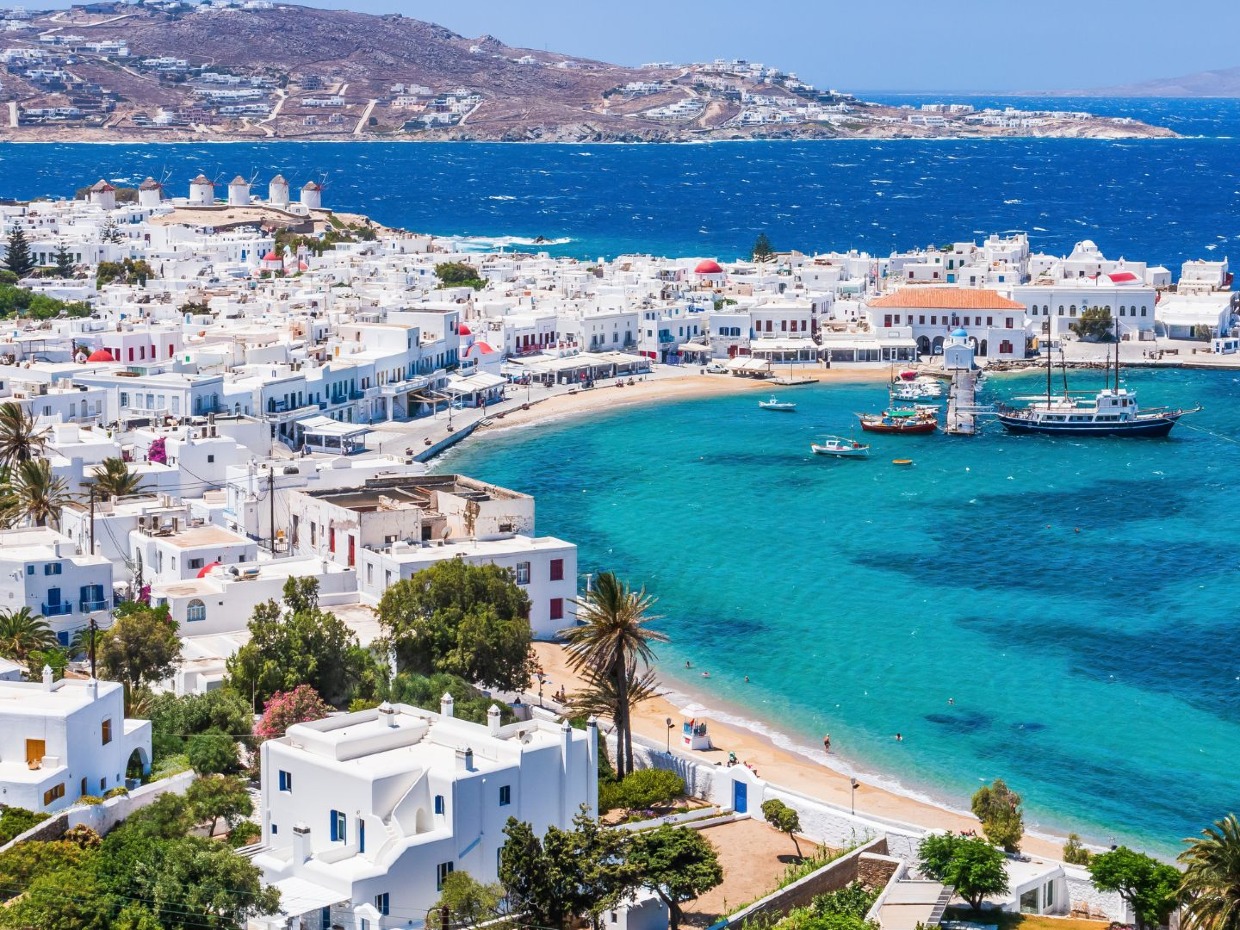
Mykonos, in particular, is not just a place you book. It is a place you navigate. The island is small, seasonal, windy, glamorous, intense, and socially sensitive. The difference between an average experience and an exceptional one is often invisible to the guest, but very visible to the person managing it.
Ibiza works similarly, but with its own rhythm. It is not enough to know where to go. You need to know when to move, when to secure, when to avoid, when to push, when to step back, and when the island has already changed before the client has finished asking the question.
This is where companies like Cloud 9 Concierge quietly become valuable, not because we believe luxury should be complicated, but because we know exactly where it becomes complicated before the client ever sees it.
The best concierge work is not loud. It is almost annoyingly invisible.
When it is done well, the guest thinks the day simply unfolded beautifully.
Cute. Let them think that.
#Why trips fall apart even with good advisors
It is important to say this clearly: many trips do not fall apart because advisors are bad.
Often, the opposite is true. The advisor has done excellent work. The trip has been designed thoughtfully. The client has been understood. The destination has been chosen well.
The breakdown happens because the advisor is managing from a distance while the experience is happening in real time.
That gap matters.
Time zones matter.
Local pressure matters.
Peak-season movement matters.
Venue relationships matter.
The ability to solve something in five minutes instead of five hours matters.
A remote advisor can create the vision. But without strong on-ground coordination, the advisor can easily become the person reacting to problems rather than the person controlling the experience.
That is a painful place to be. Nobody wants to be texting three suppliers at midnight because a client wants something “simple” that is, in fact, not simple at all.
Especially not in August.
#The rise of villas, yachts, and private experiences makes execution even more important.
One of the clearest shifts in luxury travel is the growing appeal of villas, private rentals, multigenerational trips, and private experiences. Forbes has covered the role of luxury villas for multigenerational vacations, and Parents recently reported that villa stays are increasingly favored for family and milestone trips, with Zicasso data showing villa demand strongly outpacing hotels for certain multigenerational travel needs.
This sounds like good news for luxury travelers. And it is.
But it also means more moving parts.
A hotel has built-in systems. A villa has freedom, privacy, and flexibility, but that flexibility must be managed. Someone needs to coordinate chefs, drivers, yacht departures, reservations, provisioning, security, wellness sessions, guest preferences, last-minute changes, and the delicate emotional politics of groups traveling together.
A villa holiday can be the ultimate luxury. It can also become a very expensive house with a view if nobody is operating it properly.
The same applies to yacht days. A yacht is not just a boat. It is timing, route, weather, lunch, crew, music, sea conditions, guest mood, and the moment when someone decides they want to stay longer, leave earlier, or invite two more people who were absolutely not part of the original plan.
Again, the booking is not the experience. The handling is.
#AI may improve travel. It will not replace the person on the island.
There is another layer to this conversation: technology.
AI, automation, digital itineraries, booking engines, and CRM systems will absolutely improve how travel is planned. Forbes has noted that AI can make travel agents more human by removing repetitive friction, which is exactly where technology can be useful.
But let us not get carried away.
AI can summarize preferences. It can organize information. It can suggest restaurants. It can build a schedule. It can even produce a beautiful itinerary that looks emotionally intelligent and vaguely Tuscan if you ask nicely.
What it cannot do is stand outside a villa in Mykonos when the driver is late, call the right person at the right venue, understand the social temperature of a table, feel the wind change before a yacht day, or know when a client’s “it’s fine” actually means it is very much not fine.
Luxury travel still depends on human judgment.
Actually, it depends on very fast human judgment.
The kind that does not need a committee, a ticket number, or a “we will revert shortly.”
#The hidden product is operational calm.
This is the part nobody puts on the brochure.
The real luxury product is calm.
Not silence. Not boredom. Not minimalism. Calm.
The calm of knowing the transfer is already adjusted.
The calm of knowing the villa is stocked before arrival.
The calm of knowing the beach club table is not just confirmed but appropriate.
The calm of knowing the yacht day has a Plan B that does not feel like a Plan B.
The calm of knowing someone is handling the inevitable changes without turning them into drama.
That calm is what clients remember as “seamless.”
And seamless does not happen by accident. It is built, watched, adjusted, and protected.
At Cloud 9 Concierge, that is the layer we care about most. Not because it sounds glamorous, although occasionally it does, but because it is where the trip either becomes exceptional or slowly starts leaking value.
In Mykonos and Ibiza, we have learned that the difference between success and failure is rarely one big decision. It is usually 50 small decisions made before the client has to ask.
#So why are trips still falling apart?
Because too many luxury trips are still built like static products in a dynamic world.
Because too many people confuse confirmation with control.
Because “VIP” is often used as a label when it should be treated as a responsibility.
Because clients are buying emotion, but many operators are still selling inventory.
Because a beautiful itinerary does not manage traffic, wind, mood, timing, ego, expectations, or the sudden desire to change everything at 6:30 p.m.
Because luxury travel is booming, yes, but the operational standard has not caught up everywhere.
And because in destinations like Mykonos and Ibiza, the island always reveals who is actually prepared.
#The future belongs to those who can operate, not just book.
The next phase of luxury travel will not be won only by those with the prettiest villas, the biggest supplier lists, or the most polished proposals.
It will be won by those who can make complexity feel invisible.
The advisor who understands the client.
The planner who understands the emotional architecture of the trip.
The concierge who understands the destination from the inside.
The on-ground team that can move before the client feels friction.
That is where luxury is going.
Not toward more things.
Toward better control of the experience.
Not toward louder promises.
Toward quieter execution.
Not toward “we booked it.”
Toward “we handled it.”
And perhaps that is the real answer to the question.
Luxury travel is booming in 2026, but trips are still falling apart because luxury has outgrown the itinerary.
The modern client does not want a list of impressive arrangements. They want the feeling that the whole trip is alive, responsive, protected, and somehow always one step ahead of them.
Which is exactly the point.
The best luxury travel no longer looks like planning.
It looks like nothing went wrong.
And darling, that takes work.