
#Mykonos is easy to recognize and surprisingly difficult to understand.
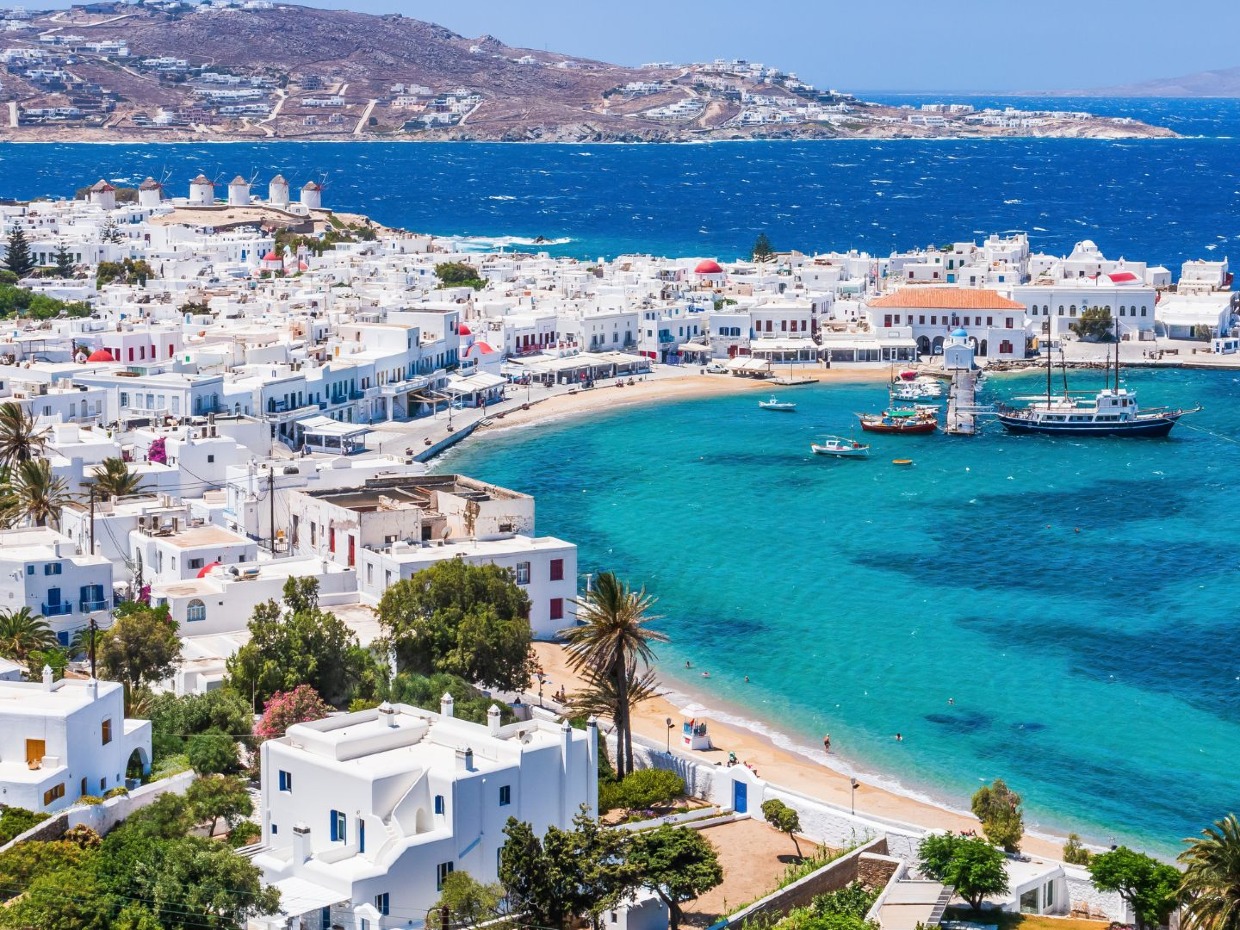
From a distance, it presents itself as a clear idea: a sun-washed island, white architecture, blue water, and a rhythm that moves effortlessly from late mornings into long, luminous nights. It is photographed constantly, described endlessly, and, in many ways, reduced to a series of familiar images that feel almost interchangeable.
And yet, for those who spend time on the island—really spend time, not visit—it becomes evident that Mykonos is not a simple destination at all. It is, in fact, one of the most operationally nuanced environments in luxury travel today, a place where appearances suggest ease, but reality demands precision.
That gap between perception and reality is where the misunderstanding begins.
#The problem with how Mykonos is sold
Luxury travel, as an industry, still tends to present destinations as products. You assemble the right elements—a villa, a few reservations, a yacht day, a curated itinerary—and the expectation is that the experience will unfold accordingly.
This approach works reasonably well in structured environments. In cities with predictable flows, or in resorts designed to contain complexity, the itinerary can carry a significant portion of the experience.
Mykonos does not operate under those conditions.
Here, the itinerary is not the experience. It is the framework within which the experience must be continuously managed.
The difference may sound subtle, but it is decisive.
Because while the island appears static when viewed from afar, it behaves dynamically once you are inside it. Demand concentrates quickly. Movement compresses into narrow windows. Preferences shift as the day evolves. And the environment itself—particularly the wind—introduces variables that cannot be ignored or postponed.
The result is a destination that does not reward planning alone. It rewards responsiveness.
#The role of timing, or why the same plan can feel entirely different
In Mykonos, timing is not a detail. It is a structure.
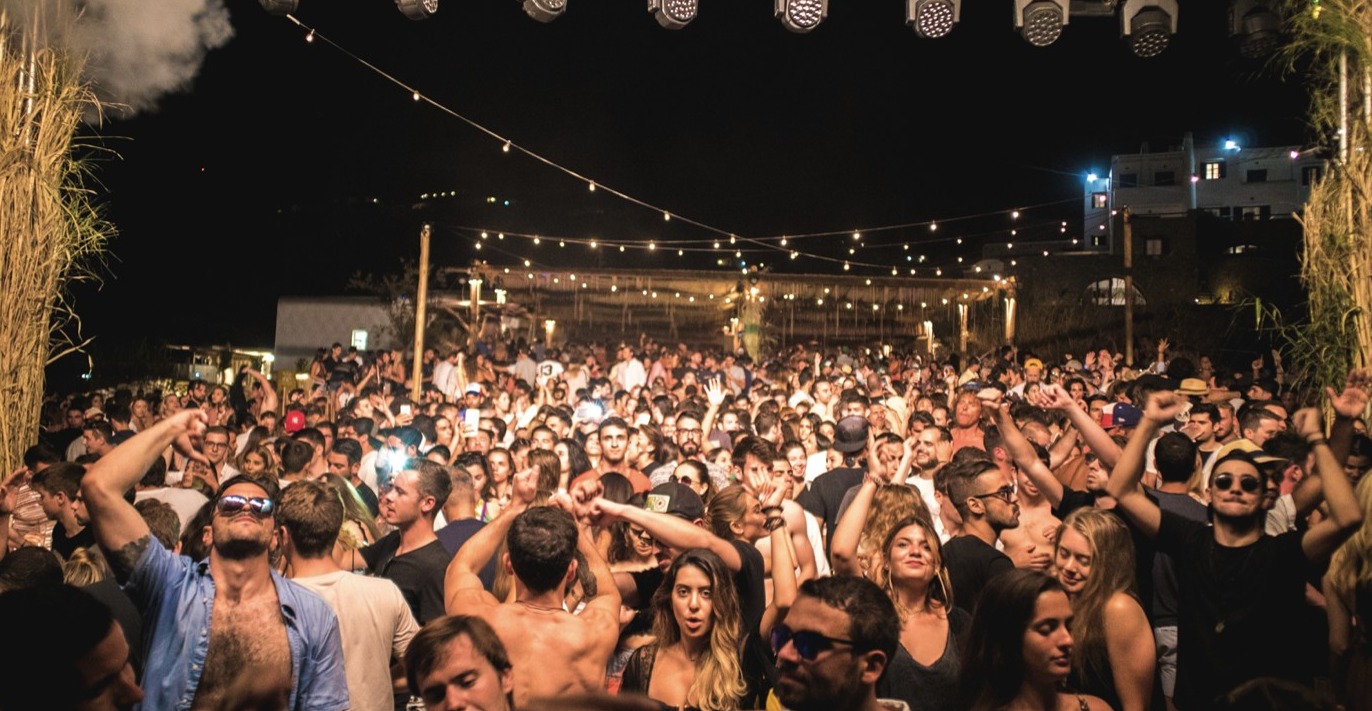
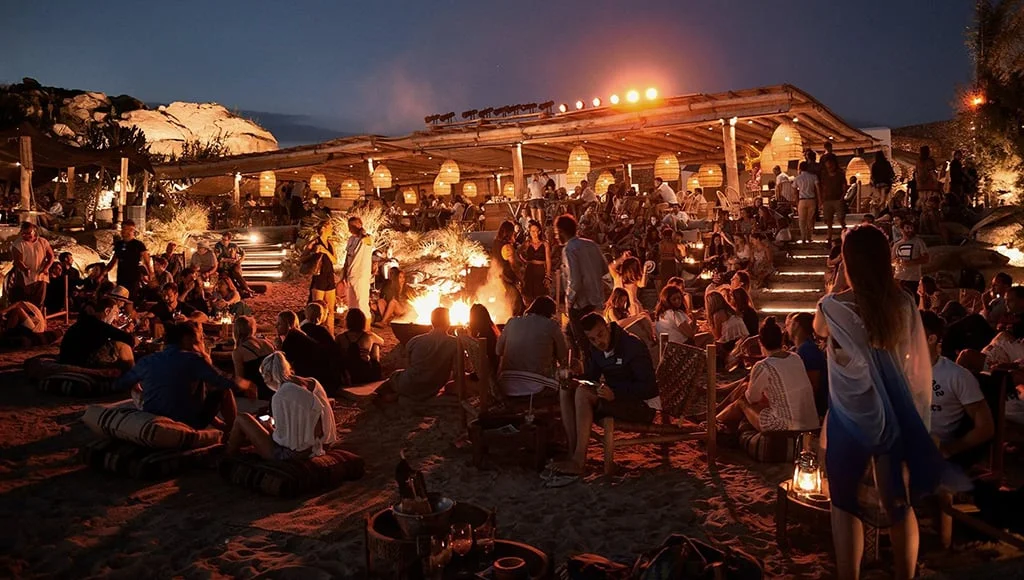
The same beach club can feel entirely different at 2:00 in the afternoon and at 5:30 in the early evening. The same dinner reservation can either extend a perfect day or disrupt its rhythm entirely. The same yacht itinerary can feel seamless or strained depending on how the day has been paced before it.
These shifts are rarely visible in advance. They emerge in real time, shaped by a combination of demand, mood, weather, and movement across the island.
This is where many experiences begin to drift.
Not because anything is wrong in isolation, but because the sequence is slightly misaligned. The day feels fractionally off, and in a high-expectation environment, that fraction becomes noticeable.
Luxury, in this context, is not defined by the presence of premium elements. It is defined by the absence of misalignment.
#The wind that defines everything
Mykonos’ most defining feature is also the one least understood by first-time visitors: the Meltemi.
It is the reason the air feels lighter, even when temperatures reach the low 30s. It is the reason evenings remain comfortable and nights retain a certain clarity. It is, quite literally, what keeps the island breathable during peak summer.
It is also what makes the destination operationally complex.
The wind determines where you go, how long you stay, and how each part of the day connects to the next. It influences yacht routes, beach selection, comfort levels, and even the overall energy of the experience.
Handled correctly, it enhances everything. Ignored, it introduces friction.
This dual role—both benefit and constraint—is central to understanding Mykonos. It is not an obstacle. It is a condition that must be read and respected.
#Why access is no longer the differentiator
There was a time when access defined luxury travel. The ability to secure a table, a villa, or a yacht that others could not was, in itself, the value.
In 2026, that dynamic has shifted.
Access remains important, but it is no longer sufficient. The market has expanded. Availability, while still competitive, is not the primary barrier it once was.
What clients now expect is not simply entry, but continuity.
They expect that each part of their day will connect naturally to the next. That adjustments will be made before they are needed. That the environment will respond to them without requiring constant input.
In other words, they expect the experience to feel managed, even if they never see the management.
This is where Mykonos reveals its complexity most clearly.
Because the island does not provide continuity by default. It must be created.
#The quiet points where experiences begin to fail
Mykonos rarely produces dramatic failures. It is not a destination that collapses. It is a destination that subtly misaligns.
A transfer that arrives slightly late at the wrong moment.
A table that is correct, but not positioned as expected.
A day that moves too quickly, or not quickly enough.
An evening that does not quite match the energy that came before it.
None of these issues are catastrophic. All of them are noticeable.
And in a context where expectations are elevated, noticeability is enough.
This is why the island is often described as “good, but not exceptional” by those who have not experienced it at its best.
The components were present. The cohesion was not.
#The difference between visiting and understanding
There is a distinction that tends to emerge over time.
Some people visit Mykonos. Others understand it.
Visitors engage with the surface: the venues, the views, the visible rhythm of the island. They follow the itinerary, move between locations, and experience what has been arranged.
Those who understand the island operate differently. They anticipate transitions. They adjust pace. They recognize when a plan needs to evolve and when it should remain intact.
They are not reacting to the day. They are guiding it.
This difference is rarely visible externally. It is felt internally, in the smoothness of movement, the absence of delays, and the way each moment seems to arrive at the right time.
#Where on-ground execution becomes decisive
In environments like Mykonos, the gap between planning and execution is not theoretical. It is practical.
Decisions that would take hours to coordinate remotely must often be made in minutes. Conditions that appear stable in the morning may shift by the afternoon. Client preferences, particularly at the higher end of the market, tend to evolve in real time.
Without a presence on the ground, the ability to respond quickly diminishes. The itinerary becomes fixed, even when the situation is not.
This is where the role of a concierge changes from supportive to essential.
At Cloud 9 Concierge, the focus is not on constructing the most elaborate plan, but on maintaining control once the plan meets reality. The work happens between the lines of the itinerary, in the adjustments that are rarely seen but always felt.
When it is done well, the client experiences continuity. When it is not, the gaps begin to show.
#Why people return
Despite its complexity, Mykonos has a remarkable return rate.
Those who experience the island in its full rhythm tend to come back, often repeatedly. Not because it is simple, but because it is distinctive.
There is a balance here that is difficult to replicate: energy without exhaustion, visibility without pressure, structure without rigidity. The weather supports it. The scale of the island reinforces it. The social environment amplifies it.
When everything aligns, the experience feels effortless.
And that feeling, more than any single element, is what people seek to return to.
#The misunderstanding, clarified
Mykonos is not misunderstood because it is overrated. It is misunderstood because it is incomplete when described at the surface level.
It is not a collection of venues. It is a sequence of moments.
It is not defined by access. It is defined by timing.
It is not delivered by planning alone. It is sustained by execution.
To approach it as a simple destination is to miss its nature entirely.
To approach it as a system—one that requires awareness, precision, and continuous adjustment—is to begin to understand why, at its best, it remains one of the most compelling luxury environments in the world.
And why, once experienced properly, it is rarely left behind.