There was a time when even the most privileged travelers measured their lives in departures and arrivals. Stamps on passports signaled motion, achievement, access. Movement itself was the currency of status.
Today, something far more interesting is unfolding at the highest levels of global wealth.
The truly sophisticated are no longer chasing destinations. They are selecting environments.
Instead of asking, “Where should we go this summer?” they are asking a far more consequential question:
“Where should we live for the season?”
Not visit. Live.
What began quietly among European dynasties and old-money families has evolved into a structural shift in how modern wealth behaves. Founders, investors, hedge fund partners, tech operators, and family offices are increasingly abandoning the compressed rhythm of traditional luxury travel in favor of extended Mediterranean residency.
Not because they can.
Because it is smarter.
Because it is healthier.
Because it is the only remaining expression of freedom that cannot be replicated digitally.
Seasonal living is no longer indulgence. It is strategy.
---
The Great Recalibration of Time
Ultra-high-net-worth individuals have always optimized for the one asset that compounds beyond money: time.
Over the past decade, wealth expanded dramatically, but so did cognitive load. Liquidity events created younger millionaires. Global portfolios demanded constant oversight. Connectivity erased the boundary between presence and obligation.
The result was predictable: exhaustion disguised as success.
Fast travel, once aspirational, began to feel inefficient. Crossing oceans for four nights no longer represented luxury. It represented friction.
And friction is the one thing highly optimized lives refuse to tolerate.
Seasonal relocation solves this elegantly.
One flight. One arrival. One deeply considered base.
From there, life unfolds without urgency.
Morning swims become routine rather than novelty. Children develop familiarity rather than jet lag. Even professional obligations adapt; board calls taken from shaded terraces carry a very different psychological weight than those conducted between airport lounges.
What emerges is not vacation.
It is continuity — simply relocated somewhere beautiful.
---
From Hospitality to Habitat
Hotels, regardless of excellence, are designed around transience. Villas, by contrast, enable permanence — even if temporary.
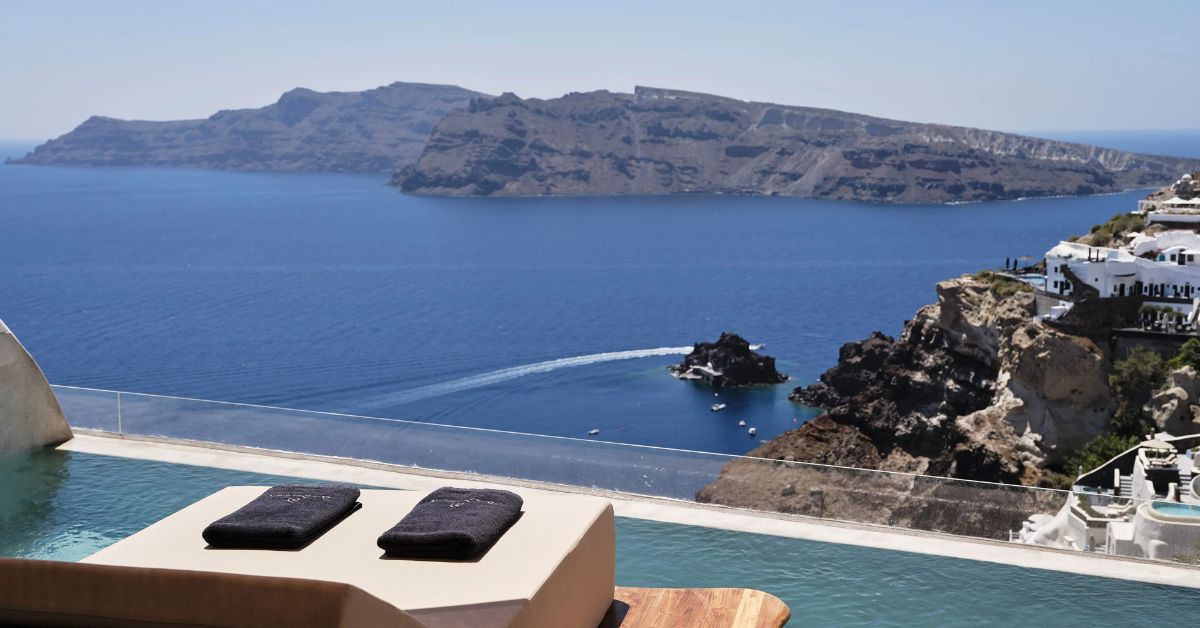
This distinction is precisely why the Mediterranean has reclaimed its historical role as the summer capital of global affluence.
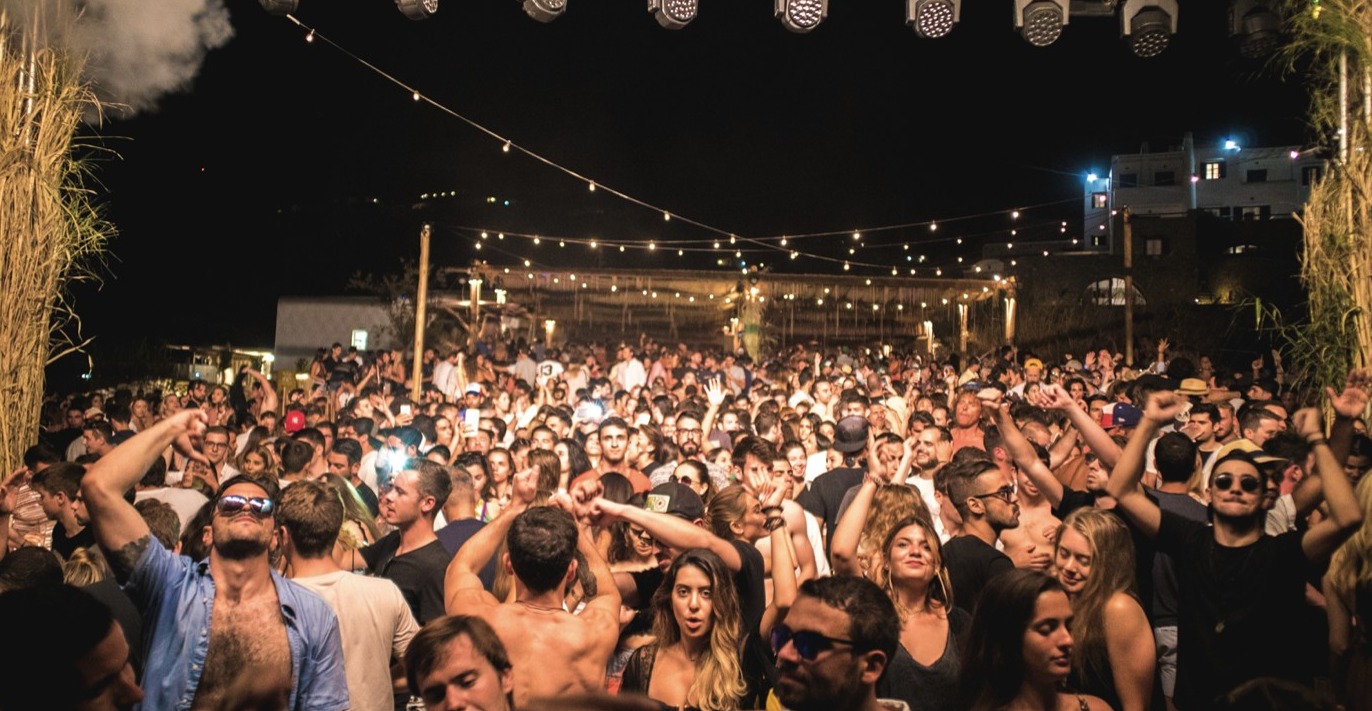
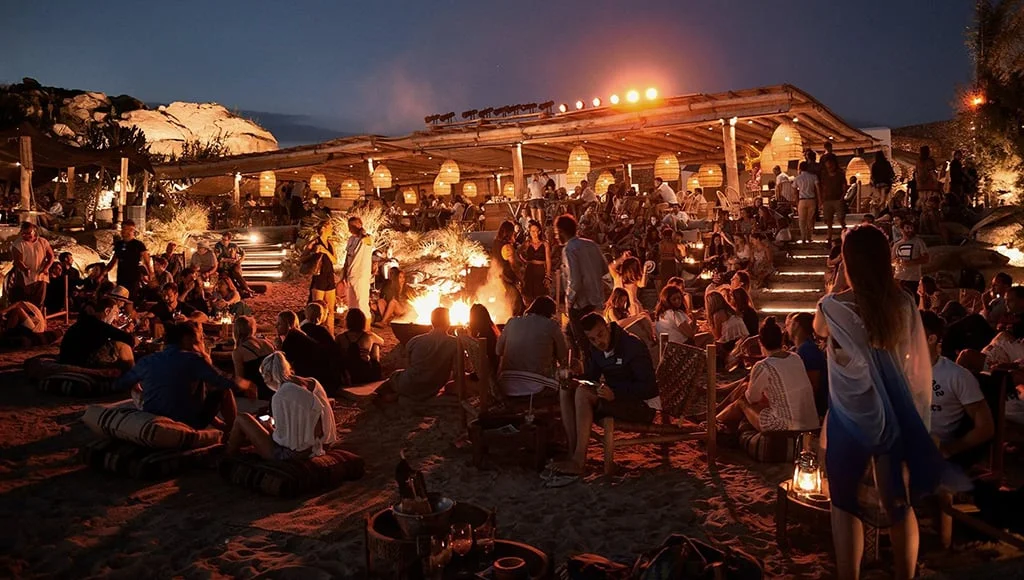
Places like Mykonos have evolved beyond their reputation as seasonal playgrounds. Beneath the visible energy lies a sophisticated residential infrastructure capable of supporting extended stays with remarkable discretion.
The modern seasonal resident does not seek spectacle. They seek seamlessness.
A properly staffed private villa becomes less accommodation and more operating system.
Chefs who understand dietary nuance without instruction. House managers who track preferences across years. Drivers who intuit silence when calls run long. Security that exists without announcing itself.
Once these elements synchronize, the experience shifts from service to lifestyle architecture.
And architecture, unlike hospitality, is not easily abandoned after a week.
---
Why the Mediterranean — Why Now?
Several forces are converging simultaneously.
Climate Stability
Reliable sunshine is not trivial when one is relocating an entire family ecosystem. Predictability reduces decision fatigue.
Proximity
Within a few flight hours, residents can reach London, Zurich, Paris, Dubai, or New York via efficient private routes.
Cultural Density
Few regions offer comparable layering: gastronomy, history, art, coastline, and social life coexist without requiring logistical gymnastics.
Privacy Without Isolation
The Mediterranean has mastered an elegant paradox — one can disappear entirely or step into society at will.
This elasticity is irresistible to individuals whose public and private lives demand careful choreography.
---
Mykonos: The New Residential Intelligence
To understand why Mykonos has become central to this movement, one must look past outdated clichés.
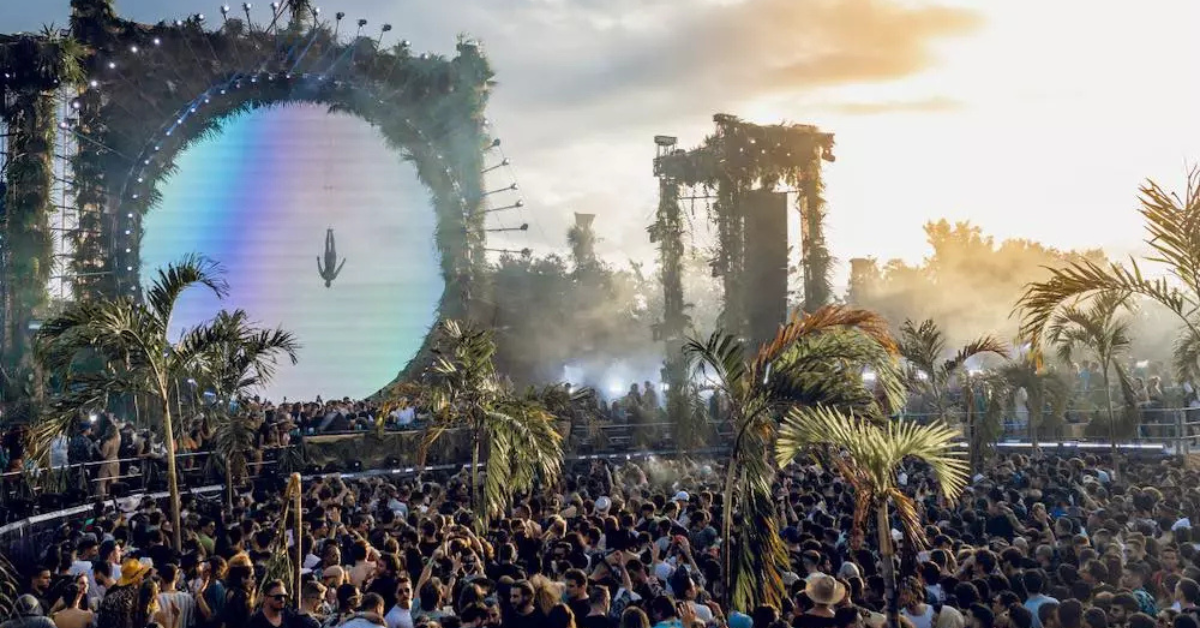
Yes, the island still knows how to celebrate. But what sophisticated residents recognize is its geographic intelligence.
Within minutes, one can transition from vibrant shoreline to complete stillness. Entire hillsides host estates invisible from the road. Helicopter access reduces what once felt remote into something effortlessly reachable.
More importantly, the island has matured operationally.
Private provisioning networks now rival those of major capitals. Rare wines, specialized fitness equipment, last-minute tutors, advanced wellness practitioners — all can be arranged quietly.
For the UHNW resident, this is the true definition of luxury:
Not abundance, but availability without friction.
---
The Psychology of Staying Put
There is also a subtler transformation underway — one that cannot be quantified in nightly rates.
Humans regulate themselves through familiarity. The nervous system settles when patterns emerge.
Seasonal living introduces rhythm:
* The same morning light across the terrace
* The same table reserved without asking
* The same swim route along the shore
* The same scent carried on evening wind
Within days, cortisol drops. Within weeks, perspective expands.
Decisions improve when the mind is not defending itself against constant transition.
Many family offices now quietly acknowledge what neuroscience has long suggested: environments shape cognition. Better environments often produce better leadership.
In this sense, seasonal relocation becomes less lifestyle and more executive optimization.
---
Social Gravity Without Performance
Another misconception deserves correction.
Extended stays are not about isolation. They are about curated proximity.
The Mediterranean summer has always functioned as an informal summit for global influence. Conversations that would require months of scheduling elsewhere unfold spontaneously over dinners that were never meant to become strategic.
However, unlike urban power centers, these interactions occur without theatricality. Linen replaces tailoring. Time expands. Hierarchies soften.
Relationships deepen faster when nobody is watching the clock.
This is why so many deals that begin as conversations by the water quietly reshape industries months later.
Seasonal living is not retreat from relevance.
It is repositioning within a different arena.
---
The Role of Concierge Infrastructure
None of this operates smoothly without a highly adaptive support system.
For seasonal residents, concierge is no longer about access. Access is assumed.
The true function is orchestration.
Anticipating visiting guests before calendars fill. Transforming a private residence into an event space overnight. Bringing wellness practitioners directly into the home. Filtering invitations so social energy remains intentional rather than exhausting.
At the highest level, concierge becomes an extension of personal governance — protecting time, privacy, and emotional bandwidth.
When executed properly, residents stop noticing the machinery entirely. Life simply works.
And when life works, people stay longer.
---
The Family Office Perspective
Increasingly, wealth managers are advising clients to think of seasonal residences as portfolio components rather than indulgences.
The reasoning is pragmatic:
* Reduced burnout preserves leadership performance
* Stable environments benefit children’s development
* Informal networking generates measurable opportunity
* Lifestyle satisfaction lowers impulsive spending elsewhere
What once appeared discretionary now resembles intelligent allocation.
The Mediterranean, therefore, is not competing with other vacation destinations. It is competing with stress itself.
And winning.
---
Designing a Season Rather Than Booking One
Those who approach seasonal living successfully share a common mindset: they design before they arrive.
They consider questions such as:
* What emotional state should this summer produce?
* Who deserves proximity during this chapter?
* Which obligations are truly non-negotiable?
* What pace allows clarity to return?
From there, the structure follows naturally.
Perhaps a month anchored in one villa, punctuated by brief excursions rather than constant relocation. Perhaps private gatherings replacing public scenes. Perhaps wellness integrated quietly into daily life rather than performed.
The objective is not to escape reality.
It is to return to it more intelligently.
---
A Quiet Redefinition of Status
There was a period when visibility defined luxury.
Today, restraint increasingly signals confidence.
Those who can remain somewhere beautiful without needing to announce it occupy a different category entirely.
Seasonal living reflects this evolution. It is less about demonstrating freedom and more about exercising it.
The individuals adopting this model are rarely the loudest in the room. But they are often the most deliberate.
And deliberateness, in an era of acceleration, has become its own form of power.
---
What Happens Next
As mobility continues to globalize and remote leadership becomes normalized, seasonal residency will likely expand beyond summer alone. We are already witnessing shoulder seasons gain traction among those who prefer warmth without density.
The implication is clear: the future of luxury travel does not belong to movement.
It belongs to placement.
To environments chosen with care.
To time reclaimed rather than spent.
---
Final Thought
The Mediterranean has always offered beauty. What it now offers is something rarer — permission to slow without withdrawing from significance.
For the world’s wealthiest, that may be the ultimate luxury.
Not more destinations.
But one place, returned to often enough that it begins to feel unmistakably like home.