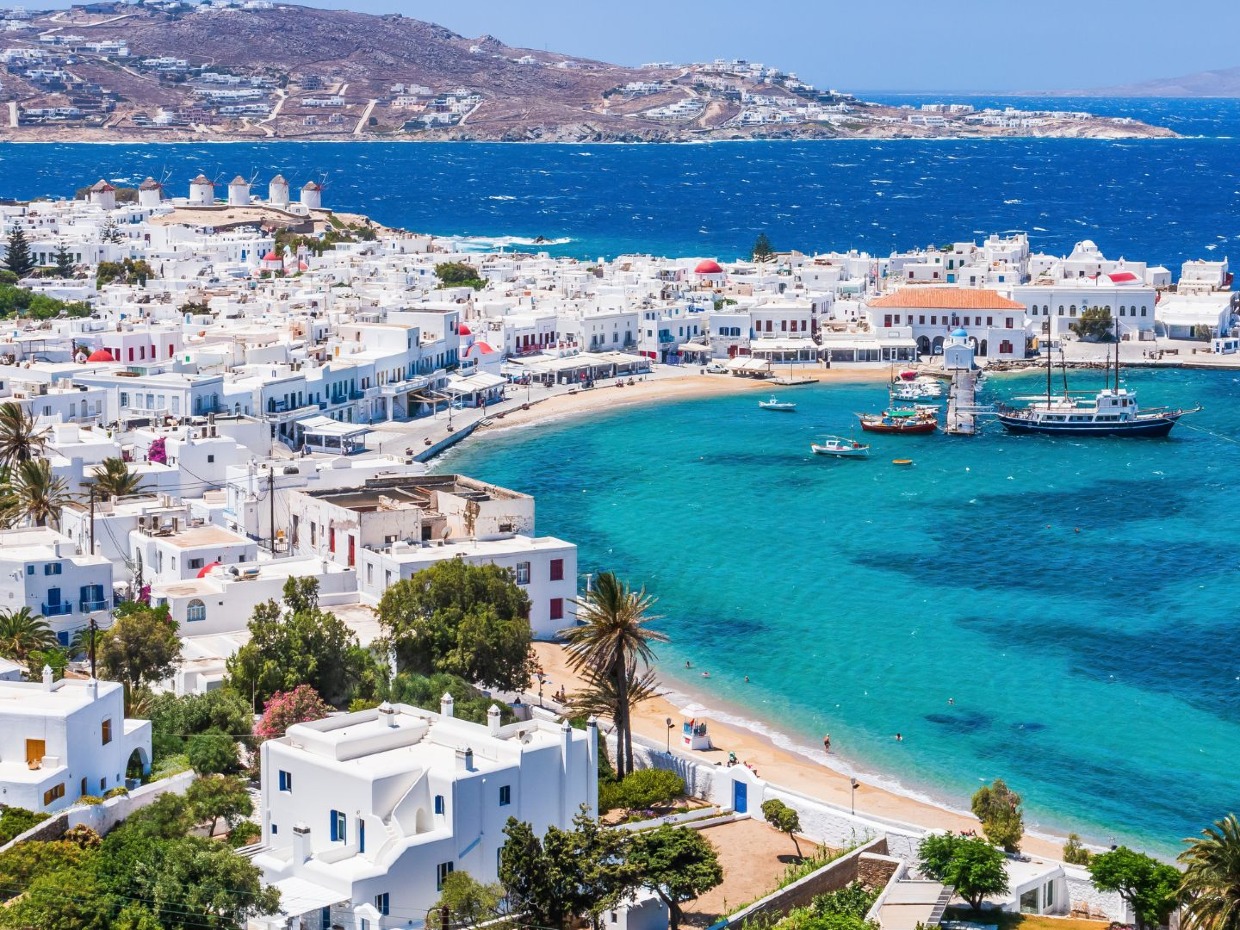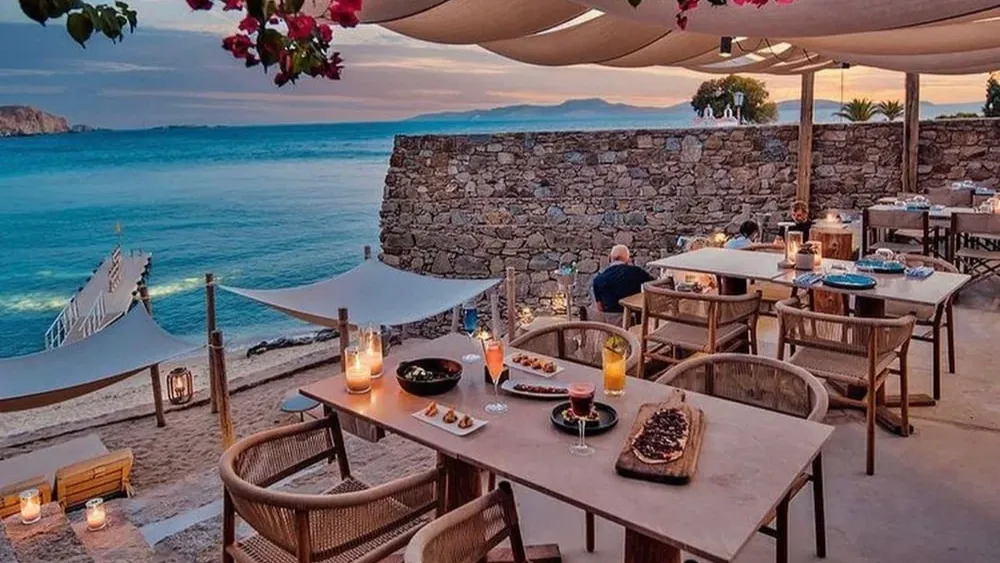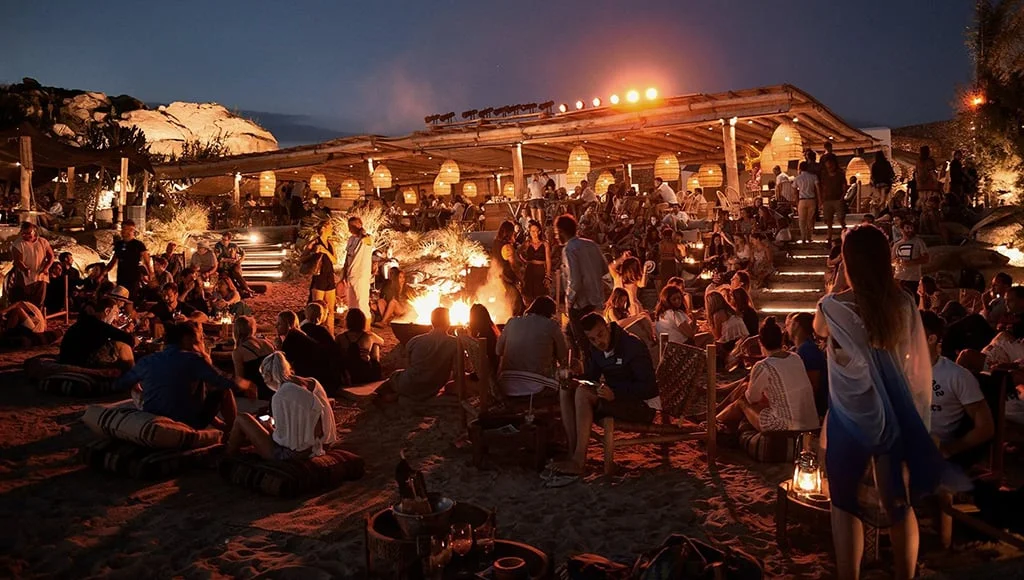

Each summer, a familiar pattern repeats itself across the desks of U.S.-based travel advisors, lifestyle managers, and event planners. A Mykonos itinerary is assembled with care and confidence: a well-positioned villa, a yacht day along the southern coast, a sequence of beach clubs, and a handful of carefully chosen dinners. On paper, the structure is sound. The components are correct. The client expectation, naturally, is high.
What tends to be underestimated is not the design of the trip, but the nature of the destination itself.
Mykonos operates less like a traditional leisure destination and more like a compressed, high-intensity ecosystem. Over a relatively short season, demand concentrates around a small number of venues, service providers, and access points. Availability shifts quickly. Pricing is fluid. Decisions that appear confirmed one week can become negotiable the next, and occasionally irrelevant the day after.
This is not a reflection of poor organization. It is simply how the island functions under pressure.
#The Illusion of a Completed Plan
From a distance, Mykonos appears straightforward. The major venues are well known, the villas are well photographed, and the booking pathways are accessible. This creates the impression that once the key elements are secured, the experience will unfold accordingly.
In practice, however, the itinerary is only the starting point.
Reservations are rarely static. Beach club layouts evolve with crowd dynamics. Transfer networks are strained at peak hours, particularly between late afternoon and early evening when movement between villas, beaches, and restaurants overlaps. Clients, especially those traveling at the upper end of the market, tend to adjust their preferences in real time. They extend lunches, change venues, request upgrades, or seek access that was not part of the original plan.
What is being tested in those moments is not the quality of the booking, but the capacity to respond immediately and effectively on the ground.
#Expectation Has Quietly Shifted
The modern luxury traveler is not evaluating a trip based solely on where they stayed or what they visited. The more meaningful measure is how the experience felt in motion. Was there friction? Were adjustments handled seamlessly? Did the environment respond to them, or did they have to adapt to it?
This expectation is particularly pronounced in destinations like Mykonos, where visibility, timing, and access are part of the experience itself. A table is not simply a table; it is placement, recognition, and continuity within a social environment that moves quickly. A transfer is not merely transport; it is the difference between arriving composed or arriving already compromised by delay.
These details rarely appear in an itinerary, yet they define the outcome.
#Where Distance Becomes a Constraint
For advisors and planners operating from the United States, the challenge is not a lack of expertise. On the contrary, the level of design, curation, and client understanding is often exceptional. The constraint is geographic.
Time zone differences slow decision-making. Communication chains lengthen. What should be a five-minute adjustment becomes a sequence of messages, confirmations, and dependencies. In a destination where conditions can shift within an hour, that delay is significant.
The result is a gradual loss of control over the experience. Not dramatically, but incrementally. Enough for the client to notice.
#The Role of On-Ground Execution
In this context, the value of an on-ground partner becomes less about convenience and more about operational continuity.
Someone who is physically present on the island operates within the same rhythm as the destination. They are aware of daily fluctuations, not just seasonal trends. They can interpret nuance, anticipate bottlenecks, and resolve issues before they surface to the client. More importantly, they can act without delay.
This is not about replacing the advisor or planner. It is about extending their capability into the environment where the experience is actually taking place.
#A More Realistic View of Mykonos
It is useful to think of Mykonos not as a product to be sold, but as a system to be navigated. The visible elements, villas, yachts, venues, are only one layer. Beneath them is a network of relationships, timing sensitivities, and informal hierarchies that determine how smoothly a plan can be executed.
Those who engage with the island at this level tend to deliver experiences that feel effortless, even when they are not. Those who do not often find themselves reacting to circumstances rather than shaping them.
#A Quiet Adjustment in Approach
For professionals sending clients to Mykonos this season, the question is not whether the itinerary is strong. It likely is. The more relevant question is how resilient that itinerary is once it meets the reality of the island.
Who is ensuring that a confirmed plan remains optimal as conditions evolve?
Who is protecting the client experience in real time?
Who is able to act without delay when expectations shift?
These are operational questions, but they have a direct impact on perception, satisfaction, and ultimately, reputation.
#Closing Thought
Mykonos rewards precision, timing, and presence. It is a destination where the difference between a well-executed trip and an exceptional one is often invisible to the client, but very clear to those managing it.
For those who approach it with the right structure, it remains one of the most compelling environments in the Mediterranean. For those who rely solely on pre-arranged plans, it can be less predictable.
Understanding that distinction, and planning accordingly, is what separates a good outcome from a memorable one.